
KLEVV CRAS V RGB PRIME 128GB: The best memory for flight sim

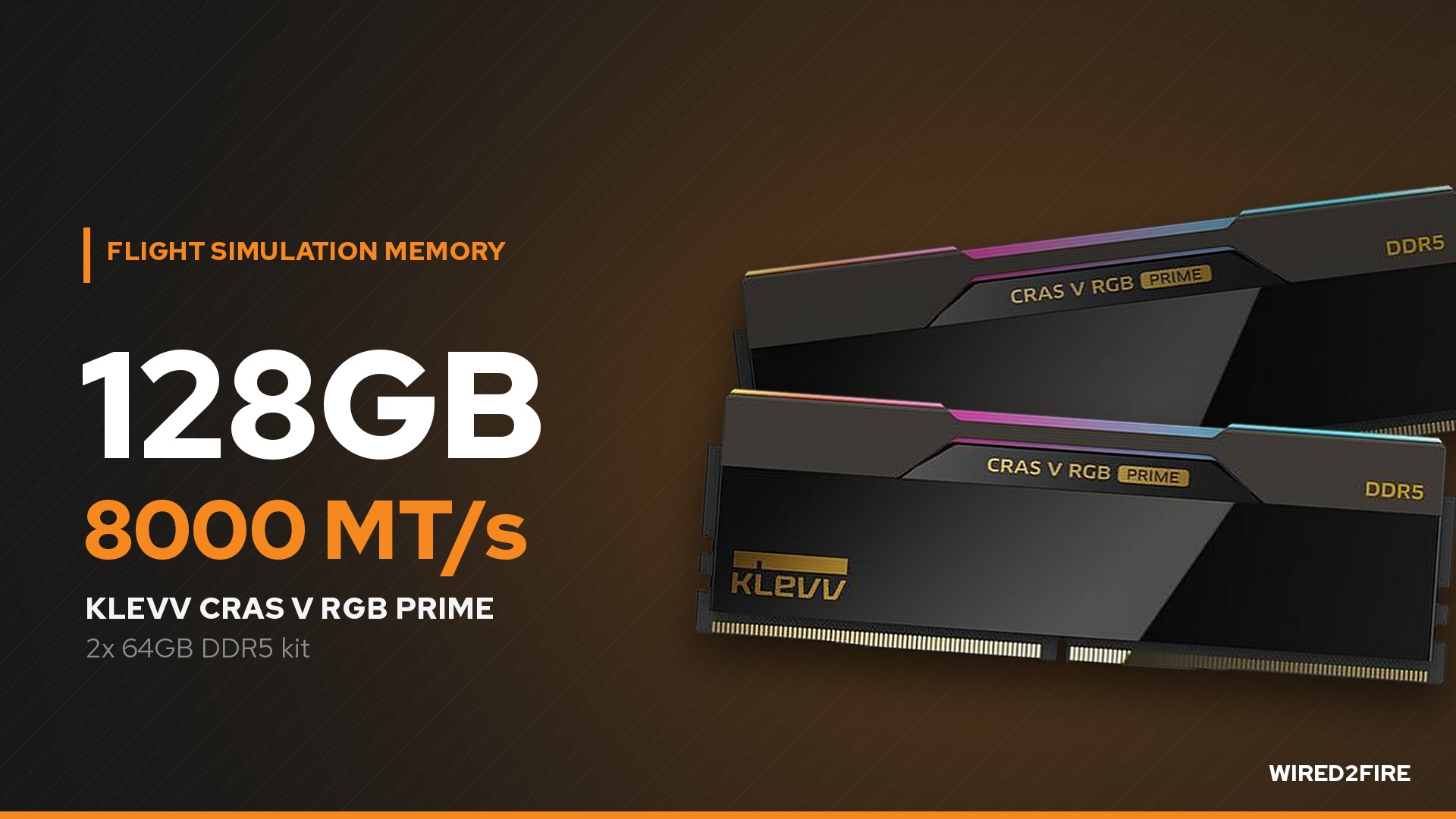
Ask any serious simmer what holds their setup back and you’ll get a list: the GPU, the CPU, the storage. Memory rarely makes the cut. Yet it’s often the first thing to run out when you load a payware airliner into a detailed add-on airport, with live traffic, live weather, a VR headset and half a dozen companion apps running in the background.
That’s why we’re genuinely excited about the new KLEVV CRAS V RGB PRIME in its 128GB form: two 64GB modules running at 8000 MT/s (often listed as 8000MHz). Until now, you simply couldn’t buy that mix of capacity and speed in a two-stick kit. Here’s why we think it’s the ultimate memory upgrade for flight simulation, and what you need to know before you choose it.
Why are flight sims so hungry for memory?
Most games load a level, keep it in memory and get on with it. Flight simulators don’t work like that. Microsoft Flight Simulator 2024 streams the entire planet around you as you fly, pulling in terrain, photogrammetry, buildings and traffic data continuously. DCS World loads huge theatres like Syria, Afghanistan and the Kola Peninsula, then layers complex aircraft modules, AI units and multiplayer sessions on top.
Now add the extras most of us run alongside the sim:
- Add-on scenery: detailed airports and regional packs from the likes of Just Flight, iniBuilds and Orbx can each add gigabytes of assets.
- Study-level aircraft: PMDG, Fenix and similar products simulate full aircraft systems, and all of that lives in memory.
- Companion apps: SimBrief, Navigraph Charts, Little Navmap, vPilot, Discord and OBS all take their share.
- VR: rendering two views at high resolution puts even more pressure on the whole system.
When memory runs out, Windows starts paging data to your SSD. In a sim, that means stutters on approach, textures popping in late and, at worst, a crash to desktop halfway through a long-haul flight.

Image credit: Microsoft Flight Simulator
Is 128GB overkill?
For a while, 32GB was the sensible choice for a flight sim PC and 64GB was the enthusiast pick. Heavily modded setups, busy DCS multiplayer servers and VR have pushed that line upwards. 128GB gives you room for everything at once, with headroom for the next generation of add-ons and whatever the next major sim update asks for.
Just as important is how you get there. Running four sticks to reach 128GB makes your CPU’s memory controller work much harder, and speeds usually have to drop below 4800 MT/s to stay stable. Two 64GB modules keep you at one stick per channel, which is the setup that allows high speeds in the first place. That’s what makes this kit different: you no longer have to choose between capacity and speed.
What does 8000 MT/s actually get you?
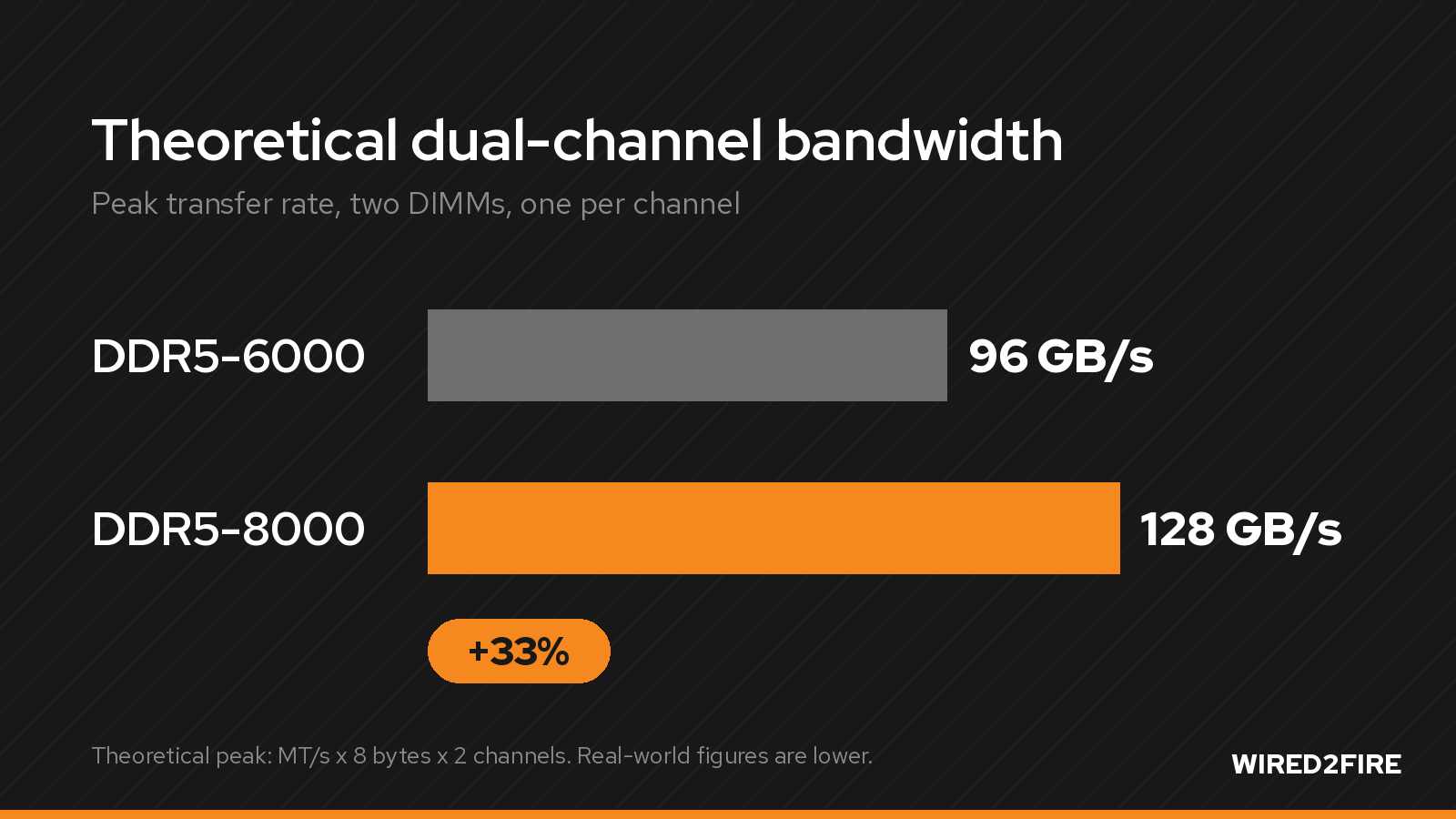
Memory speed is all about bandwidth, and flight sims move a lot of data. In a dual-channel setup, DDR5-6000 offers a theoretical 96 GB/s. At 8000 MT/s that rises to 128 GB/s: a third more bandwidth for streaming scenery, feeding the CPU and keeping frame times consistent.
In simulation, consistency is the key word. Average FPS doesn’t tell the whole story. It’s the 1% lows you feel in the cockpit: the moments when the sim loads a new scenery tile, or the AI traffic spikes around a busy hub. Faster memory helps smooth those moments out, particularly in CPU-bound sims and on Intel platforms, which tend to scale well with memory speed.
Will every PC run it at 8000 MT/s?
Here’s the bit most retailers won’t tell you. Whether a memory kit runs at its rated speed doesn’t just depend on the memory. It depends on the memory controller built into your CPU, and no two CPUs are identical.
Every processor varies slightly in quality as it comes off the production line. Some have memory controllers that will happily run at very high speeds; others top out lower. This is known as the silicon lottery. Running two high-capacity, dual-rank 64GB modules at 8000 MT/s is about as demanding as it gets, and only CPUs with a very good memory controller will hold it stable.
A few other things matter too:
- Motherboard: two-slot boards, and well-designed four-slot boards with a good memory trace layout, give you the best chance of hitting high speeds.
- Platform: Intel’s latest desktop chips generally reach high memory speeds more easily. On AMD’s AM5 platform, speeds this high run the memory controller at a different ratio to the memory, so the real-world gains differ and are worth talking through with us before you buy.
- BIOS: firmware updates often improve memory compatibility, so a current BIOS matters.
This is exactly where buying from a specialist builder like Wired2Fire pays off. We test memory on the CPU and motherboard it ships with, so you know what your system can actually do before it leaves us, rather than finding out yourself through trial and error.
Why is KLEVV the only brand doing this right now?
Hitting 8000 MT/s on 64GB modules needs the very best DRAM chips available, and that’s where KLEVV has a unique advantage.
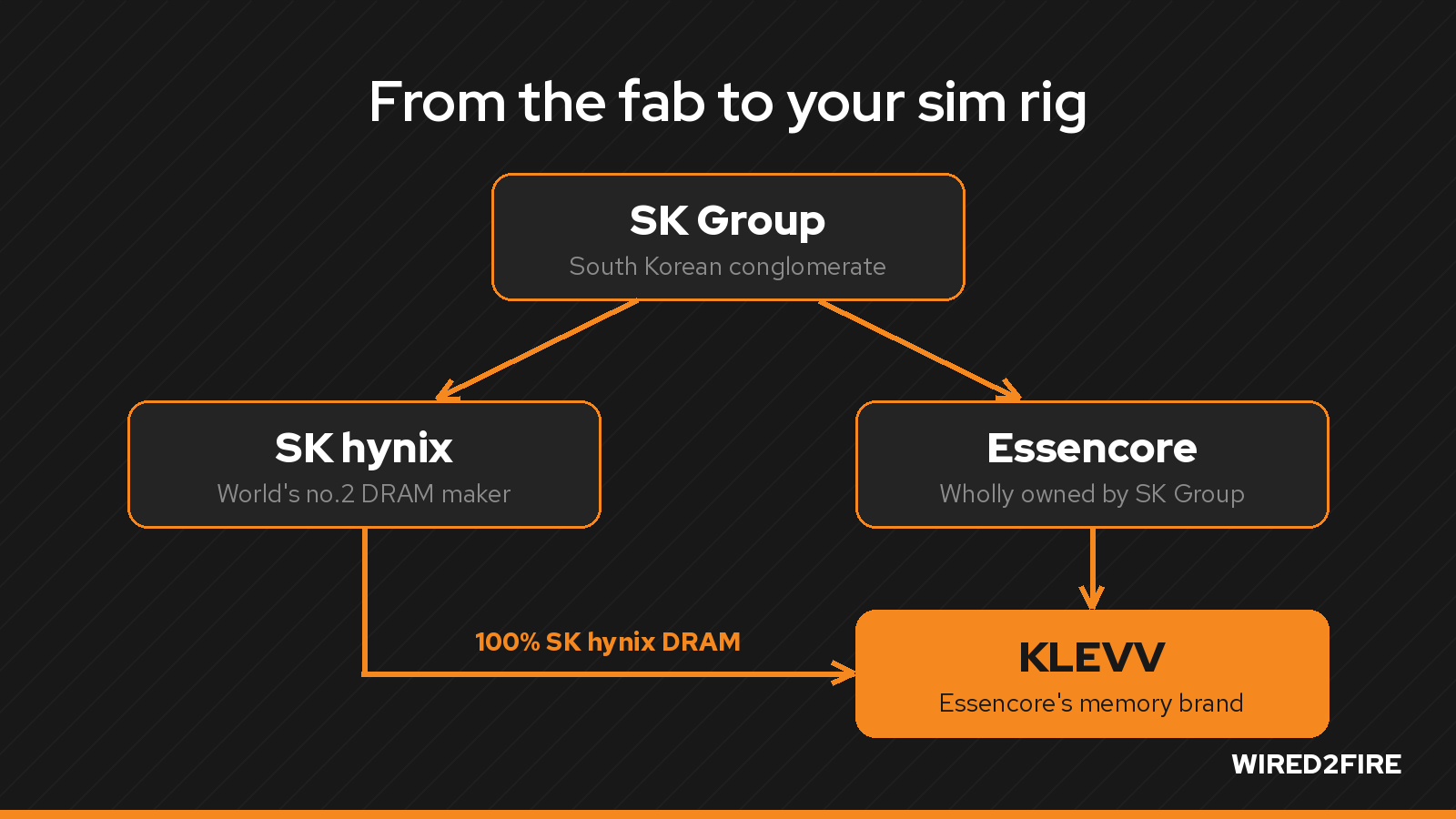
KLEVV is the house brand of Essencore, which is wholly owned by SK Group. That’s the same group as SK hynix, the world’s second-largest DRAM manufacturer. KLEVV builds its memory exclusively on SK hynix DRAM, and that close relationship gives it access to SK hynix’s highest-performing A-die chips at a time when memory supply is tighter than it has been for years.
With AI data centres absorbing huge amounts of DRAM production, top-bin chips for consumer memory are extremely hard to come by. We covered why in Why is memory so expensive right now? At the time of writing, KLEVV is the only brand we’ve seen offering a 2x 64GB kit rated at 8000 MT/s. Other brands’ 128GB kits currently top out well below that.
Meet the CRAS V RGB PRIME
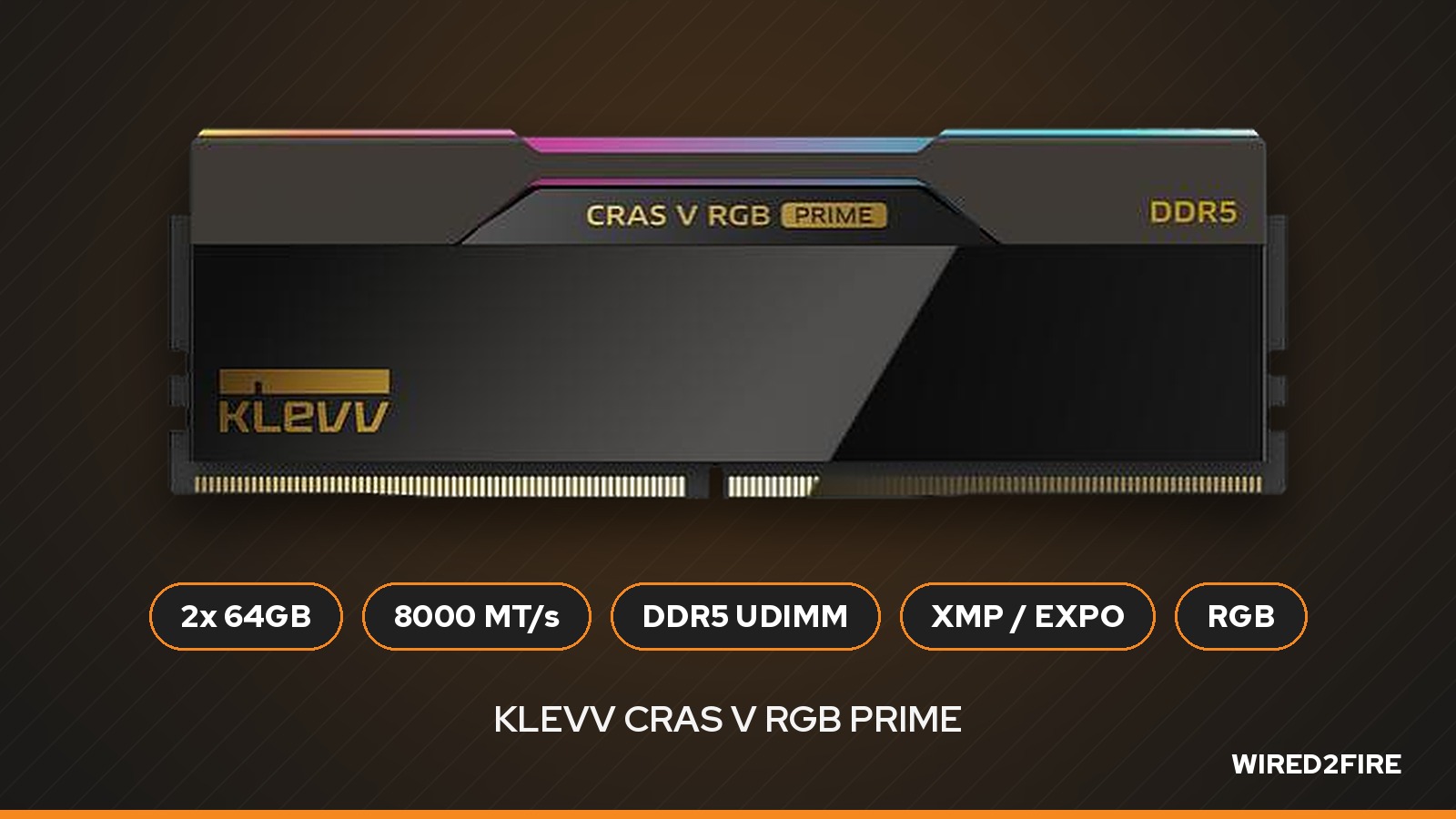
The CRAS V RGB PRIME builds on KLEVV’s CRAS V RGB range, which won both iF Design and Red Dot awards in 2024.
- Capacity: 128GB (2x 64GB)
- Speed: 8000 MT/s
- Type: DDR5 UDIMM
- Profiles: Intel XMP and AMD EXPO for one-click setup
- Lighting: full RGB, compatible with the major motherboard lighting software
It’s also a looker. The black and gold PRIME styling sits well in a premium build, and you can dial the RGB down or switch it off entirely if you prefer a darker cockpit.
What does this mean for you?
This kit isn’t for everyone, and we’d rather be honest about that. If you fly mostly default aircraft with a modest set of add-ons, 64GB will serve you well. But if any of these sound like you, the CRAS V RGB PRIME 128GB is worth a serious look:
- You run large DCS theatres or busy multiplayer servers.
- You’ve built up a big library of add-on scenery and study-level aircraft.
- You fly in VR and want the smoothest possible experience.
- You stream or record your flights alongside the sim.
- You want a system that won’t need a memory upgrade for years.
What do we think?
Flight simulation has always pushed PC hardware harder than almost anything else, and memory has quietly become one of the biggest factors in how smooth a sim feels. The KLEVV CRAS V RGB PRIME is the first kit to give simmers both 128GB of capacity and 8000 MT/s of speed on two modules, made possible by direct access to SK hynix’s best silicon.
Paired with a CPU that can handle it, it’s the ultimate memory kit for flight simulation, and one we’re proud to offer in our sim builds.
Which flight sim PC is right for you?
Ready to take your sim to the next level? Browse our Microsoft Flight Sim PCs and DCS World PCs, or build your own flight sim PC and add the CRAS V RGB PRIME 128GB kit. These are good places to start:
Sim-X Valkyrie i9 5080, £3,813.00: an Intel platform, the easiest route to 8000 MT/s, with the power for high detail MSFS 2024 at 4K.
DCS Valkyrie R7X3D 5080, £3,719.00: built for DCS and VR. It’s an AM5 system, so talk to us about the best memory setup for it.
Sim-X Valkyrie Ryzen 7 X3D RTX 5090, £6,999.99: no-compromise sims and VR, with the headroom to make the most of 128GB.
You can spread the cost with our finance options, or contact us to talk through your build.