
DLSS 4.5: What it is, and when to use it
Introduction
DLSS 4.5, or Deep Learning Super Sampling 4.5, is an advanced technology developed by NVIDIA that uses deep learning algorithms to improve the performance and visual quality of video games. In this article, we will provide a comprehensive guide to DLSS 4.5, including how it works, how it performs, and when to use it.
How DLSS 4.5 Works
DLSS 4.5 works by using deep learning algorithms to upscale lower-resolution images to higher resolutions, while maintaining high visual quality. The technology uses a neural network that has been trained on a vast amount of data to create high-quality images with minimal loss of detail.
The process of creating high-quality images with DLSS 4.5 involves four main steps:
- The game engine renders the scene at a lower resolution.
- The low-resolution image is passed through the neural network.
- The neural network upscales the image to a higher resolution, using the information it has learned from the training data.
- The upscaled image is displayed on the screen.
By using DLSS 4.5, gamers can enjoy higher frame rates and improved visual quality, even when playing demanding games on lower-end hardware.
Performance of DLSS 4.5
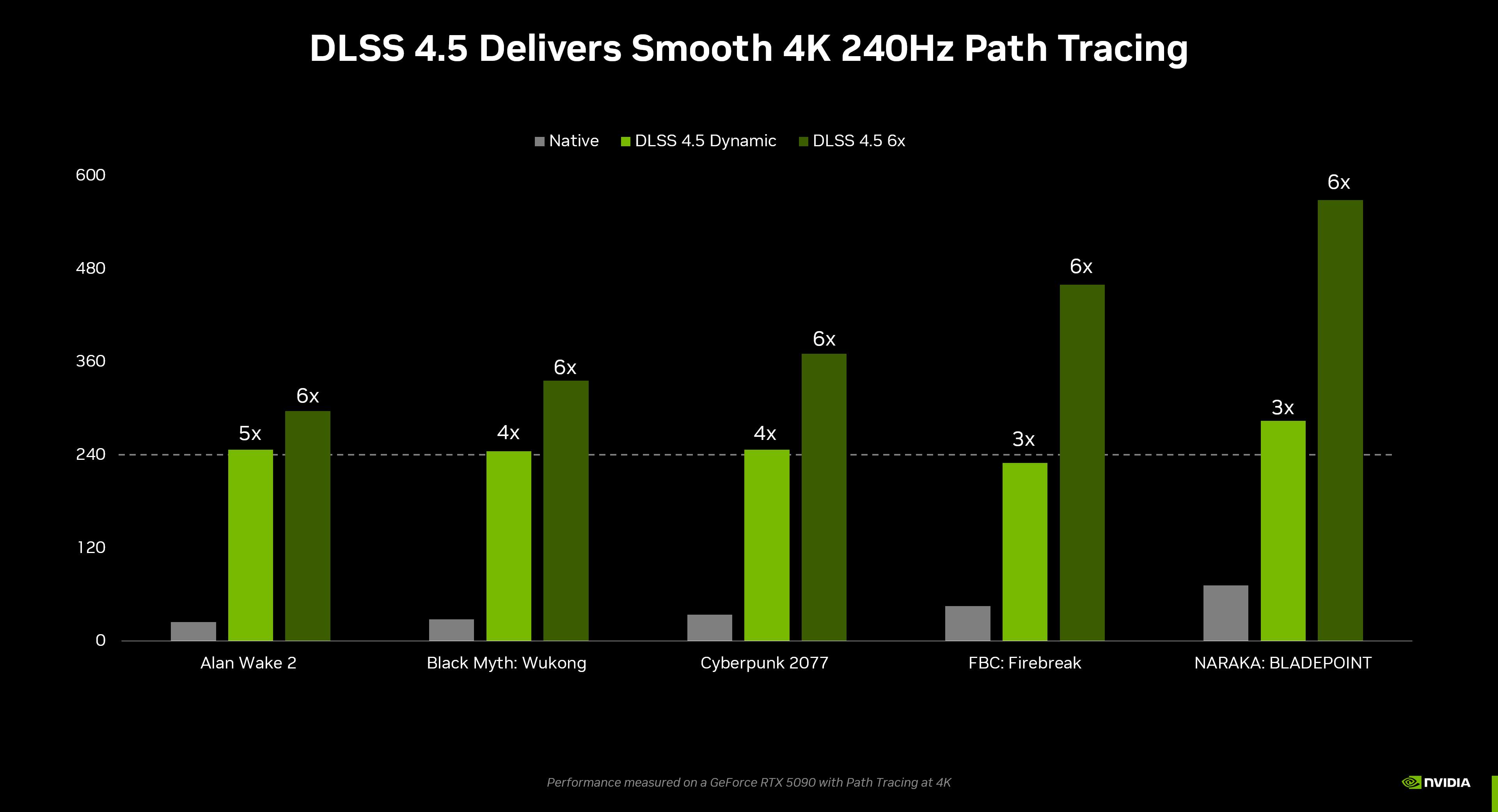
DLSS 4.5 introduces further advancements over earlier versions, delivering even greater performance gains and improved image quality through enhanced AI models and frame generation techniques. In many supported titles, frame rates can increase well beyond 2x compared to native rendering, especially when combining features like advanced Super Resolution and next-generation Frame Generation. However, actual performance improvements still depend on factors such as the game engine, GPU capability, and resolution settings.
In general, DLSS 4.5 shines most in graphically intensive AAA games, where its updated AI reconstruction and motion handling can significantly boost performance without compromising visual fidelity. In lighter or less demanding games, or at lower resolutions, the benefits may be less noticeable, as the GPU is already under less strain.
One standout example for showcasing DLSS 4.5 is Microsoft Flight Simulator. This title is known for its heavy CPU and GPU demands, where frame rates can dip to around 30 FPS even on high-end hardware like the NVIDIA RTX 4090. With DLSS 4.5 enabled, users can experience much smoother performance and improved frame pacing.
When to Use DLSS 4.5
DLSS 4.5 can be a powerful tool for improving both performance and image quality in modern games, thanks to its more advanced AI models and improved frame generation capabilities. However, it’s still not a one-size-fits-all solution.
DLSS 4.5 is most effective in graphically demanding titles and when pushing higher resolutions like 1440p or 4K, where the GPU is under significant load. It’s especially beneficial for players using mid-range or even high-end hardware who want to achieve higher frame rates without a noticeable loss in visual fidelity. With newer features like enhanced Ray Reconstruction and refined Frame Generation, DLSS 4.5 can deliver smoother gameplay and more stable performance than earlier versions.
That said, DLSS 4.5 may not be ideal for every situation. Some players prefer native resolution for absolute image clarity, particularly in slower-paced or visually sensitive games where even minor reconstruction artifacts are noticeable. Additionally, in less demanding titles or at lower resolutions, the performance gains may be minimal, making DLSS less necessary.
Conclusion
In conclusion, DLSS 4.5 represents a further evolution of NVIDIA’s AI-driven rendering technology, using more advanced deep learning models to significantly improve both performance and image quality in modern games. Like earlier versions, it works by upscaling lower-resolution images to higher resolutions, but it now does so with greater accuracy, better motion handling, and fewer visual artifacts.
DLSS 4.5 builds on this foundation with enhanced features such as improved Super Resolution, refined Ray Reconstruction, and next-generation Frame Generation, allowing for even smoother gameplay and more consistent frame pacing. In many supported titles, it can deliver performance gains well beyond 2x compared to native rendering, particularly in demanding AAA games and at higher resolutions.

Author: Wired2Fire
Wired2Fire has been hand-building custom gaming PCs, simulation rigs and workstations in Dorking, Surrey for over 20 years.