
Has Forza Horizon Finally Grown Up? A Sim Racerʼs Verdict on Whether FH6 is a Real Sim Racer
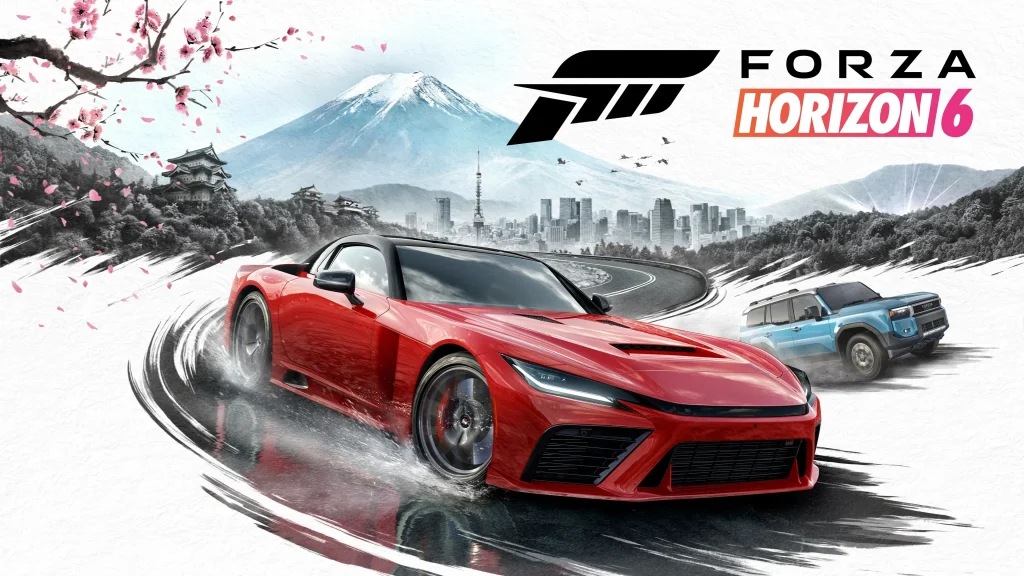
Itʼs been 14 years since the release of the first Forza Horizon game, way back in 2012. Unapologetically arcadey, the street racer was always meant to be the fun spin-off to the realistic motorsport experience of the previous Forza games – the racing game you played on a controller, on the sofa, with something cold in your hand. It’s where the reputation has lived for most of the franchise’s fourteen-year history. But with the release of Forza Horizon 6, even I have to admit it might be time to review Forza Horizonʼs standing in the racing sim genre.
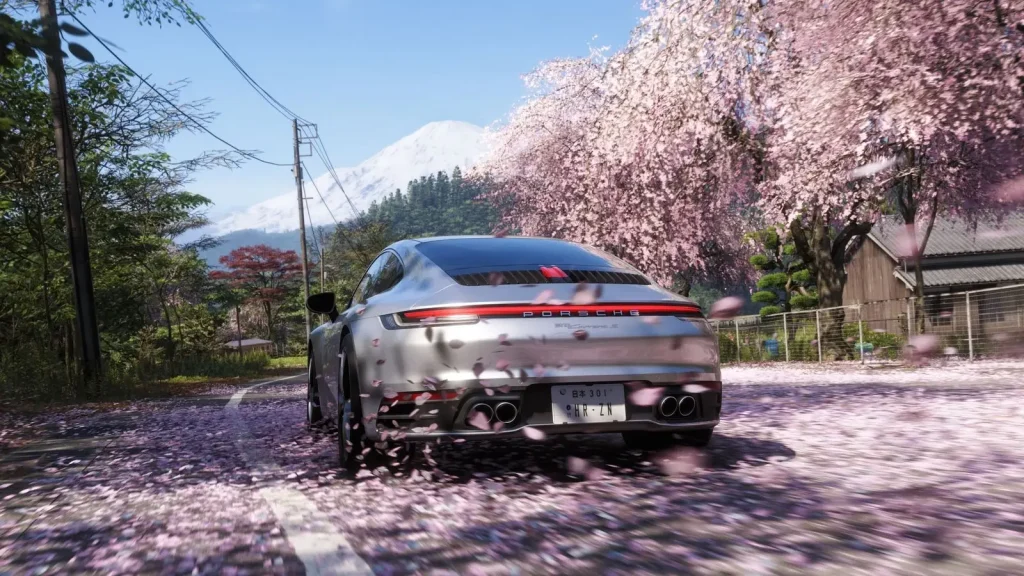
Forza Horizon 6 launched on 19th May 2026, giving players the opportunity to jump headfirst into Japanese car culture and arriving with some bold claims about what Playground Games have done to the underlying physics model. Having had some time with it and many a Gundam race later, here’s an honest verdict on whether those claims hold up.
Before Forza Horizon 6
Before talking about what’s changed, it’s worth looking into why sim racers dismissed the series in the first place, because the criticisms weren’t without reason.
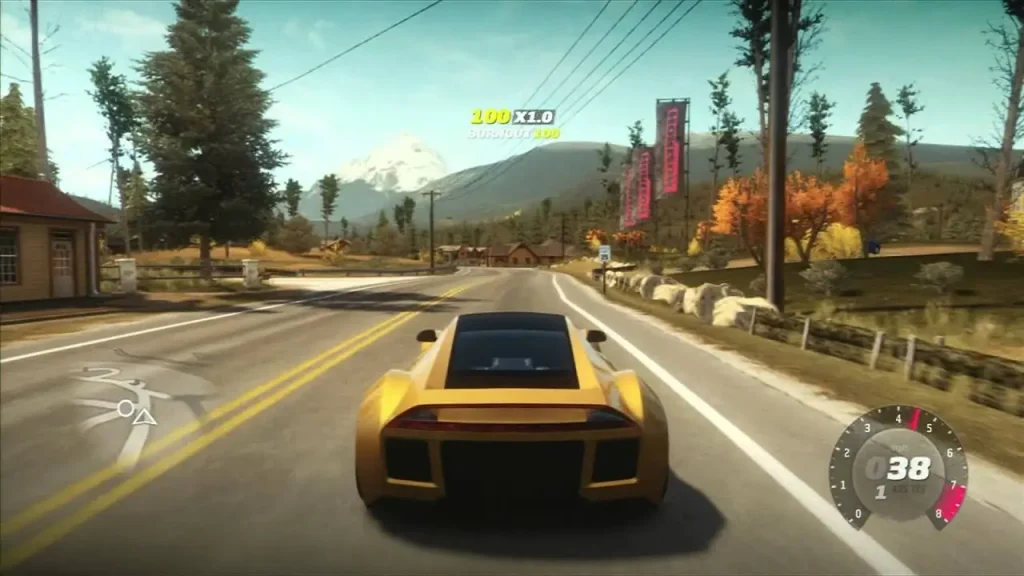
The original Forza Horizon 2012, Colorado) was intentionally arcadey. Playground built it for the audience who found Forza Motorsport to be a bit too much, people who wanted the look and feel of a high-end racing game without the learning curve that came attached. The cars were fast, the world was beautiful, and it largely didn’t matter how you drove through it. For that audience, brilliant. For sim racers looking to experience the thrill of the grid from the comfort of the cockpit, though, it was a non-starter.
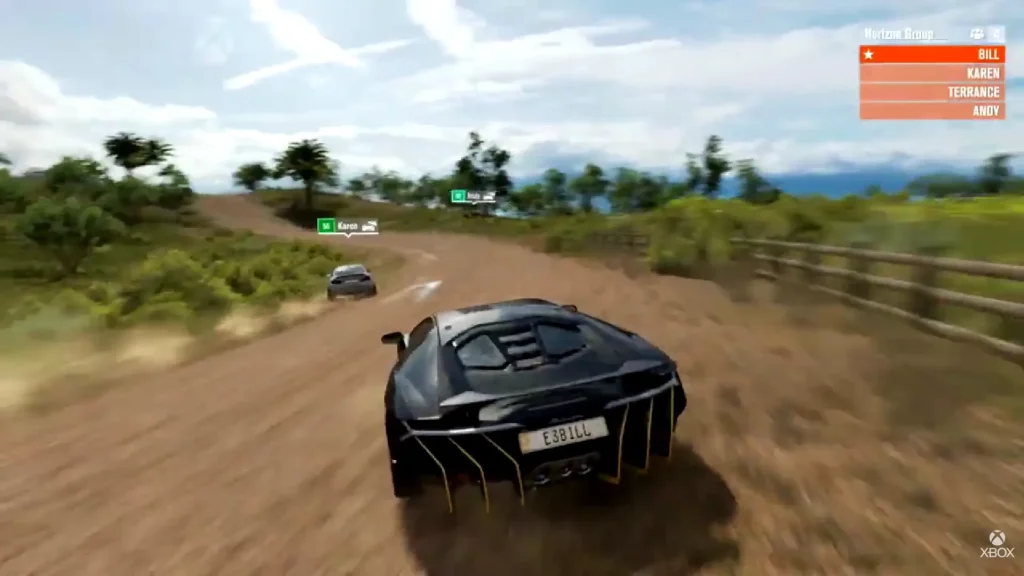
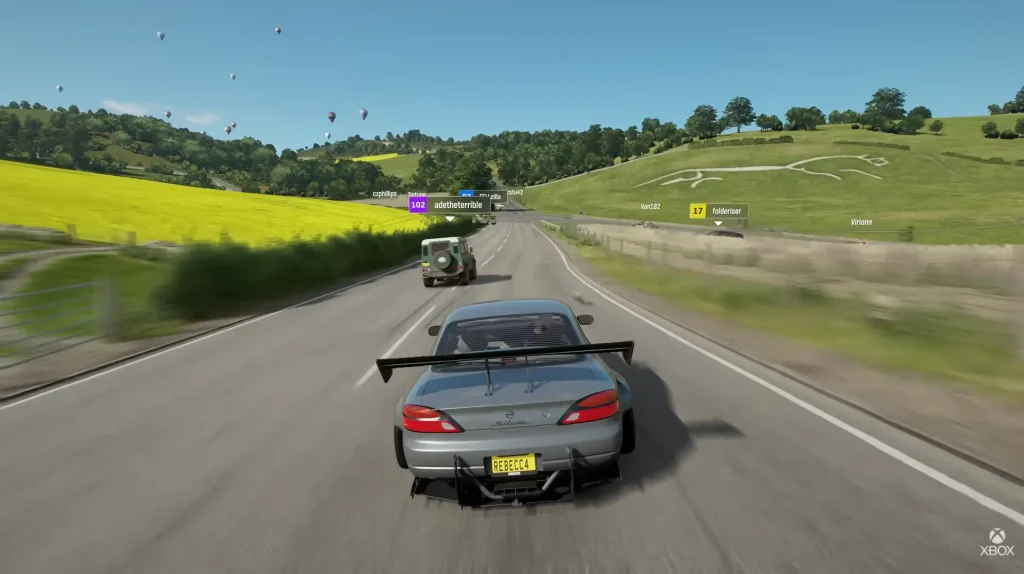
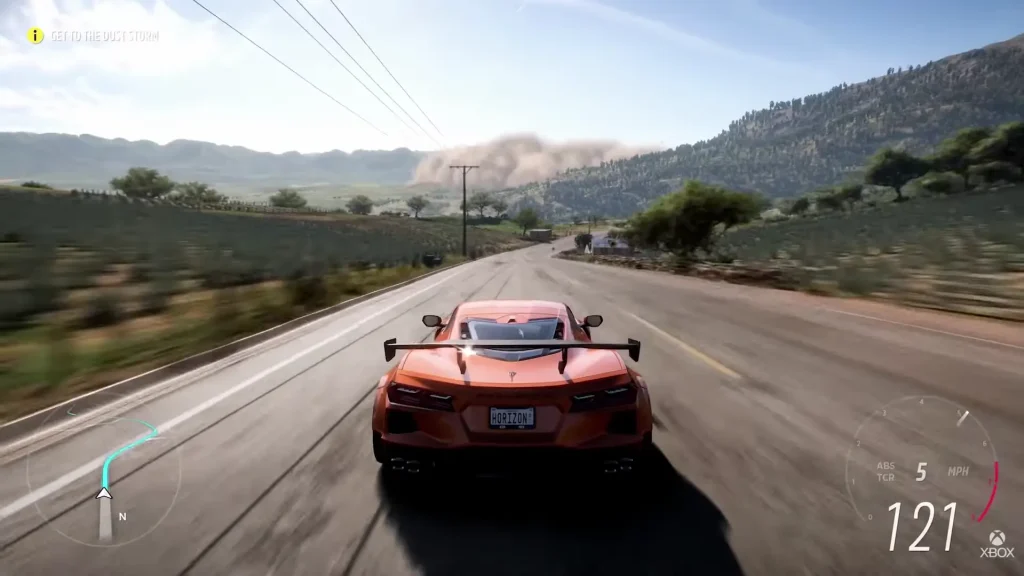
Forza Horizon 2, 3, and 4 refined the formula without fixing the physics problem. On a wheel, the cars felt like they were being guided along invisible rails. Weight transfer was non-existent. Force feedback (FFB) communicated almost nothing useful about what was actually happening with the tires. Grip loss felt more like a difficulty parameter being toggled than a physical event. And with all-wheel drive (AWD) dominating competitive play, throttle discipline was irrelevant. You could stamp on the accelerator mid-corner, and the game would find grip and comply.
Forza Horizon 4 was the worst for wheel users specifically. Set in Britain, a technically varied environment full of elevation changes that should have been perfect for any racing physics model, it somehow managed to feel completely disconnected. The FFB was mush and felt like it had been added as an afterthought. Steering had clearly been designed around a thumbstick, with the simulation of actual steering weight somewhere on the list but clearly nowhere near the top. A lot of sim racers either avoided it entirely or played it on a controller and didn’t feel even slightly bad about that decision – like me!
Forza Horizon 5 was better, and I want to give that its due. The FFB became more communicative. Some of the regression from FH4 was addressed. You could feel a genuine difference between road surfaces, which hadn’t really been true before.
It still rewarded aggression over precision and still felt like a game that had been adapted for wheel users rather than designed with them in mind, but it wasn’t Forza Horizon 4 levels of bad. That matters because it means Forza Horizon 6 isn’t starting from nothing.
So What Has Forza Horizon 6 Actually Changed?
There are five things to look at to judge what FH6 has changed: weight transfer, steering feel, force feedback, throttle modulation, and how traction loss behaves. These are the pillars of what makes a racing game feel real, and historically Horizon has been weak across all five.
Weight Transfer
This is the one that surprised me most and the change that’s most immediately felt from behind a wheel. When under braking, the nose dives and the rear lightens. Carry too much speed into a corner, and the front pushes wide in a way that feels like actual understeer rather than a game mechanic nudging you back to the line. Get back on the power too early in a rear-wheel-drive car, and the weight shifts rearward in a way the wheel is going to tell you about convincingly enough that you adjust your driving in response. That’s genuinely new for this franchise.
What makes it more interesting is that this isn’t one universal setting applied across the whole roster. Turn 10, who contributed directly to FH6’s physics development, brought to the table per-car individualisation of weight distribution and surface interaction. You can feel it. A heavy GT car managing its mass through Tokyo’s tighter streets handles differently from a lightweight JDM build on a mountain pass. Previously the whole game lived on one invisible template. That’s changed.
Steering Feel
The cockpit steering animation now goes up to 540 degrees depending on the car, which sounds like a cosmetic detail. It isn’t. In previous Horizon games, the visual disconnect between your physical wheel input and what was happening on screen was something you learned to mentally filter out. In FH6 they track together in a way that reinforces what you’re feeling through the FFB rather than contradicting it. A small thing that makes a massive difference.
The resistance under load has improved too. Push into understeer on a nose heavy car and the wheel pushes back with something approaching genuine resistance. Counter-steering feels far more natural, communicating something real about what the front tires are doing rather than returning a flat, featureless signal.
Force Feedback
Look, Iʼll be straight with you. The FFB is where the series still has the most distance to cover.
The improvements are real. The self-aligning torque signal has been rebuilt, and counter-steering, particularly on rear-wheel-drive cars, feels way more natural as a result. You can feel the moment of breakaway now rather than discovering it has already happened. Through the breath-taking scenery of Japan’s mountain passes, the combination of surface transitions and elevation keeps the wheel active in a way that feels informative rather than just noisy.
But at high speed, surface texture communication still isn’t where it needs to be. You know you’re on asphalt versus gravel, but the granularity of what the road is telling you at 150 mph isn’t matching what the best dedicated sims deliver. Community feedback on FFB is active, and Playground’s general update commitment suggests it’ll be addressed. Based on the direction of the baseline they’ve shipped, I believe them. Just adjust your expectations rather than expecting it to match something that’s been built from the ground up as a simulator.
Throttle Modulation
This, in my view, is the most significant shift in how the game actually feels to drive. In previous Horizon games, feathering the throttle on the exit of a corner in a rear-wheel drive car was something you could largely skip. The game’s generosity meant that abrupt inputs didn’t carry the consequences they should. In FH6 they do. Planting your foot too early mid-corner in an RWD car actually gives a risk of spinning out if you donʼt handle the rear rotation correctly. Trail braking is no longer just a style choice. On the right car, it’s the technique that goes fastest. Spending an evening on the mountain roads north of Tokyo learning that the hard way was one of the more enjoyable experiences I’ve had with a racing game in a while.
Traction Loss and Grip Limits
The AWD dominance that defined the competitive Horizon meta for years has been properly addressed in FH6. The full roster has been rebalanced so handling focused builds aren’t automatically outclassed. The grip limits themselves feel more progressive; you get a warning before you lose the car rather than a binary transition between grip and full chaos. On the limit, the game is communicating the edge more honestly than it ever has.
Japan Is Doing a Lot of Heavy Lifting Here
It would be incomplete to talk about the physics improvements without talking about why the setting amplifies them.
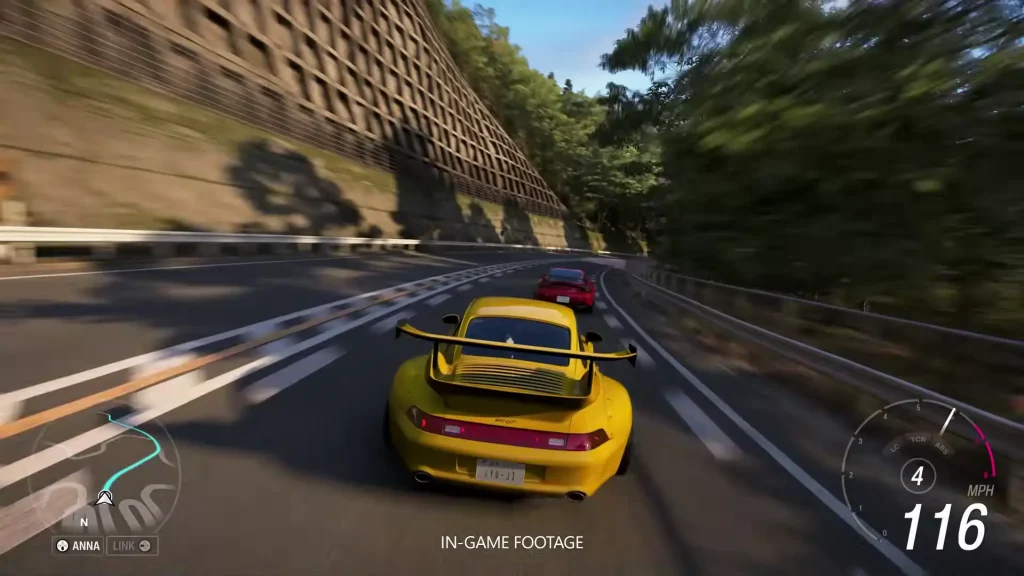
Mexico, for all its visual beauty, was a physics-forgiving landscape. Wide-open desert and long straights are not where you feel weight transfer or are rewarded for trail braking. Britain had the technical variety on paper, but the physics didn’t match the terrain’s potential. Japan is categorically different. The mountain passes demand genuine weight management. Tight touge-style corners require real technique. The Tokyo city environment, which Playground describes as the most complex and intricate drivable space in the franchise’s history, punishes understeer rather than hiding it.
The result is that the physics improvements and the map choice reinforce each other in a way that hasn’t happened in a previous Horizon game. The setting demands more from the physics model, and for the first time, the physics model is capable of answering that demand.
Does Framerate Actually Matter for FH6?
Yes. More than you might expect, and this is where playing on PC rather than console stops being about personal preference and starts being a decision that actually affects how the game feels, especially for wheel users.
At 60fps, the console experience is alright. It does the job. But when you’re on a wheel making constant micro-corrections based on what the car is telling you through the force feedback, frame rate isn’t just a visual quality metric. It’s a latency question. The difference between 60fps and 120fps is the difference between responding to what the car is doing now and responding to what it was doing 16 milliseconds ago. On a controller, that gap is mostly imperceptible. On a wheel, where you’re constantly reading and reacting to what the car’s doing, however, it can be the difference between first and second place.
Japan makes this more noticeable, not less. Tight urban streets, fast elevation changes, and technical corners that demand precision inputs are exactly where high frame rates pay off most. Add VRR support, and a well-specced PC can hold smooth, consistent frame delivery even in Tokyo’s most demanding street scenes. And Tokyo is genuinely demanding. The city is five times larger than any previous Horizon urban area, and that density creates real, sustained GPU load that console hardware simply can’t keep up with in the same way.
This is the strongest argument for running FH6 on PC. Not resolution, not visual presets. Just the quality of the feedback loop between you and the car.
So what does that look like in practice?

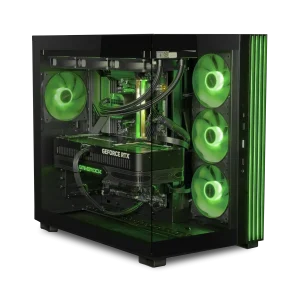
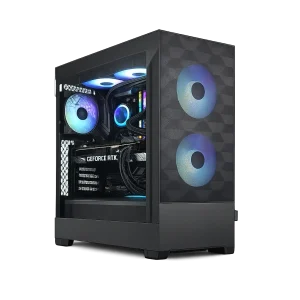
So, where to start? We have a huge range of PCs that would easily get you in pole position. At the entry point, the R5 RTX 5060 Ti Powerhouse pairs a Ryzen 5 9600X with an RTX 5060 Ti. FH6 is a game that rewards strong single-core CPU performance. Tokyo’s open-world streaming is continuous, and the physics calculations stack up quickly with multiple cars on screen. The 9600X handles it like a champ. At 1080p on high settings you’re comfortably hitting 120 fps, which is the point where the wheel experience stops feeling like a console port. The 1TB NVMe is also worth mentioning. Fast storage reduces the open-world pop-in that Japan’s density would otherwise make very obvious. If you’re coming off a console and want to actually feel the difference a PC makes to FH6, this is the system that makes that case.
Step up to the R7 RTX 5070 Fire Base Pro and you’re into 1440p at high/ultra settings with 120 fps as a consistent target rather than an optimistic one. The Intel Core Ultra 7 265KF is a strong gaming chip, and the Be Quiet! collaboration on cooling means that performance holds under load rather than throttling after twenty minutes of intense driving. For a dedicated sim setup at 1440p with a single ultrawide and a proper wheel, this is where I’d point most people. It’s got headroom to spare and won’t ask you to compromise on settings to hit your frame
rate target.
For triple monitors, 4K, or just wanting the absolute best Forza Horizon 6 can look and feel, the R7X3D RTX 5080 Beast is built for it. The Ryzen 7 9800X3D is arguably one of, if not the best, gaming CPUs you can buy right now. Its 3D V-Cache architecture gives it a genuine edge in large open-world settings, which is exactly what FH6 is. Paired with an RTX 5080 and 64GB of DDR5, it doesn’t really have a ceiling for this game. The 64GB RAM is more relevant here than it sounds. FH6’s Japan map is the densest open-world Playground has ever built, and having that headroom means the system isn’t competing with itself during a long session. The 2TB NVMe is equally appreciated. One thing worth saying clearly, though: if you’re running a triple monitor setup, GPU load multiplies significantly compared to a single screen. The Beast handles it.
Does Sim Hardware Actually Transform the Game?
More than any previous Horizon game, though that comes with some nuances worth being honest about.
Forza Horizon 6 is still built for a controller first. The accessibility layer is still there, and it should be. The mainstream audience is enormous, and the game earns every bit of their enjoyment. But Simulation Steering mode, which strips out the assist layers that were previously covering up what the physics model was actually doing, combined with the rebuilt force feedback and improved weight transfer, means there’s now a version of FH6 that genuinely rewards proper technique. Not in the way ACC rewards it. Not with the same consequences. But enough that your inputs matter, your decisions through a corner matter, and a car set up well for the road you’re on is actually faster than one that isn’t.
Honest advice on hardware: entry-to-mid-range is the sweet spot right now while Playground continues working through community feedback on FFB. A good direct drive base will get more out of the game as the force feedback tuning improves, but at the moment you’ll be ahead of what the game can give back. The foundation is solid. Give it time.
The Verdict
Forza Horizon 6 is not Assetto Corsa Competizione. It isn’t iRacing. It was never trying to be, and it would be a significantly worse game if it were.
But it is also not the wheel-hostile arcade experience that Forza Horizon 4 was. The physics overhaul is real. Turn 10’s contribution has genuinely left its mark. There is Motorsport DNA in how these cars behave that wasn’t present in any previous Horizon title. Japan’s geography demands more from the driver than any previous map in the series, and the physics are now good enough to actually meet that demand.
For the first time in this franchise, a wheel is a legitimate choice. Not a compromise, not the decision you make because you want to feel like a proper sim racer while wishing you’d picked up a controller. The game rewards precision. Not unforgivingly, not in a way that will put off newcomers but enough that the wheel adds something real to the experience rather than just adding resistance. If you’ve got a mid-range rig and a good PC and you’ve been weighing up FH6, plug it in. The experience has finally earned it.
Want to run FH6 at its best? Browse our gaming PC range — or contact the team to spec a custom build.

Author: Grace Wilkinson
Grace is an English Literature and Creative Writing graduate with a passion for storytelling and video games.