
Steam Machine or Pre-Built Gaming PC:
What’s more bang for your buck?

It’s here! Valve has officially launched the long-awaited Gabecube—I mean, Steam Machine. The compact PC, initially thought to be the next console killer, launched on the 22nd of June 2026, and is a semi-custom AMD Zen 4 starter build designed to sit under your TV rather than on your desk. The little box has created quite the buzz due to its pricing and performance, starting at £879 for the 512GB model and reaching an astonishing £1,208 for the 2TB bundle with Steam Controller.
Now, a month after its initial release, I’d say we’ve had time to form a pretty good idea of whether the Steam Machine is worth its price tag. Early predictions put the Steam Machine somewhere around £350–£400, close enough to console pricing to make it genuinely disruptive. But at £879 for the base model alone, those conversations look very different. You’re no longer comparing it to a PS5. You’re comparing it to a gaming PC. And that’s exactly what we’re going to do, because we’ve built two of our own.
What is the Steam Machine, actually?
Viewed purely as a piece of hardware, the Steam Machine is an entry-level, small-form-factor PC running SteamOS., Valve’s own Linux-based operating system, which has matured considerably since the Steam Deck put it through its paces. There’s no Windows license in the box, no Microsoft dependency, and no mandatory AI features you didn’t ask for. SteamOS is free, and Valve’s philosophy has always been that it’s your computer to do with as you like.
Under the hood, you’re getting a custom AMD Zen 4 six-core CPU paired with an RDNA 3 GPU with 8GB of GDDR6 VRAM alongside 16GB of DDR5. Valve claims this runs around six times the graphical performance of a Steam Deck, with a target of 4K at 60fps via FSR upscaling. It comes in two storage tiers, 512GB and 2TB, and the whole thing is squeezed into a cube measuring roughly 156 x 152 x 162 mm, with a wireless receiver for the new Steam Controller 2 built in.
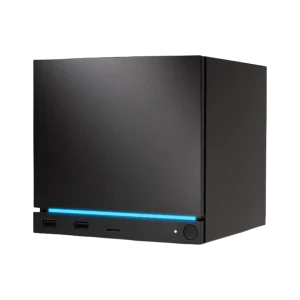
The price is higher than expected, and here's why.
Let’s talk about the number. The full Steam Machine lineup currently sits at £879 (512GB, no controller), £938 (512GB with Steam Controller), £1,149 (2TB, no controller), and £1,208 (2TB with Steam Controller). Valve has tied the price to the global memory and storage shortage, the same crunch that pushed Steam Deck prices up by more than 40% earlier in 2026. If you’ve been following our coverage of the memory market, none of this will surprise you.
Valve has openly admitted the price is higher than it had hoped. It’s also not a console-style subsidised price; what you see is what it costs to make the thing right now. OK. Fair enough. But it does mean the value question gets considerably more interesting, since it’s now competing with gaming PCs and custom builds.
How Does It Actually Perform?
Now, the Steam Machine isn’t being rated poorly by any means, regardless of the price. PC Gamer has ranked it at 62% on their ranking system, and Tom’s Hardware has described it as a “nice device for Steam Deck owners who want to have a more powerful system”. I’d agree, it is nice, but that is kind of the issue. It’s just nice.
Valve’s headline target is 4K at 60fps, with FSR upscaling doing the heavy lifting rather than native rendering, and hitting that number generally means leaving ray tracing off. Valve has since softened its own product page from a flat 4K 60 promise to a more cautious “up to 4K” claim. But read that as the ceiling, not the floor.
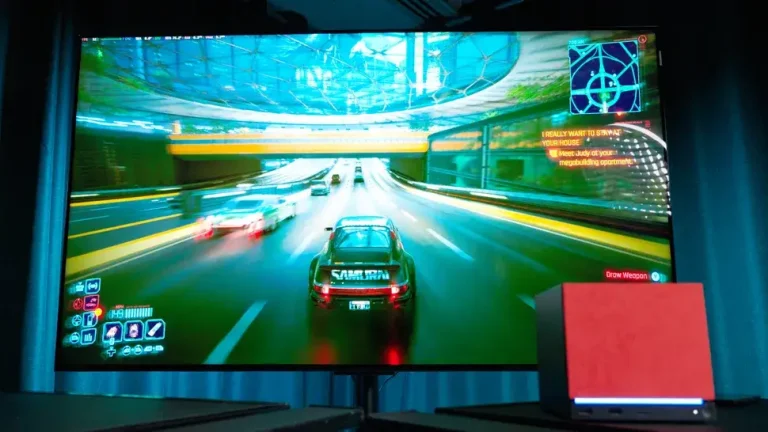
The six-core Zen 4 CPU puts it roughly in line with a mid-range desktop processor on multi-core workloads. This is decent for the size, but it’s definitely indicative of a more mobile-adjacent build, rather than full desktop PC power. Early testing allegedly showed it handling the likes of Cyberpunk 2077, a somewhat older but still demanding game, at high settings impressively for a box this compact. However, more recent overall reports and reviews seem to suggest that it’s barely reaching an average of 30-40fps at medium settings. Ray tracing is where it falters; the 28-CU RDNA 3 GPU is at best midrange, and the most demanding titles will rely on FSR rather than brute force to hit frame rate targets.
That said, FSR upscaling from 1080p is considerably more forgiving on a large TV at couch distance than it is on a monitor you’re sitting 60cm from. You’ll likely struggle to find a modern game that doesn’t feature ray tracing as a must or boast of the best experience in UHD and up, but given that the Steam Machine is designed to sit in your living room, let’s be generous and assume not everyone has a UHD or 4K model TV anyway. Context matters.
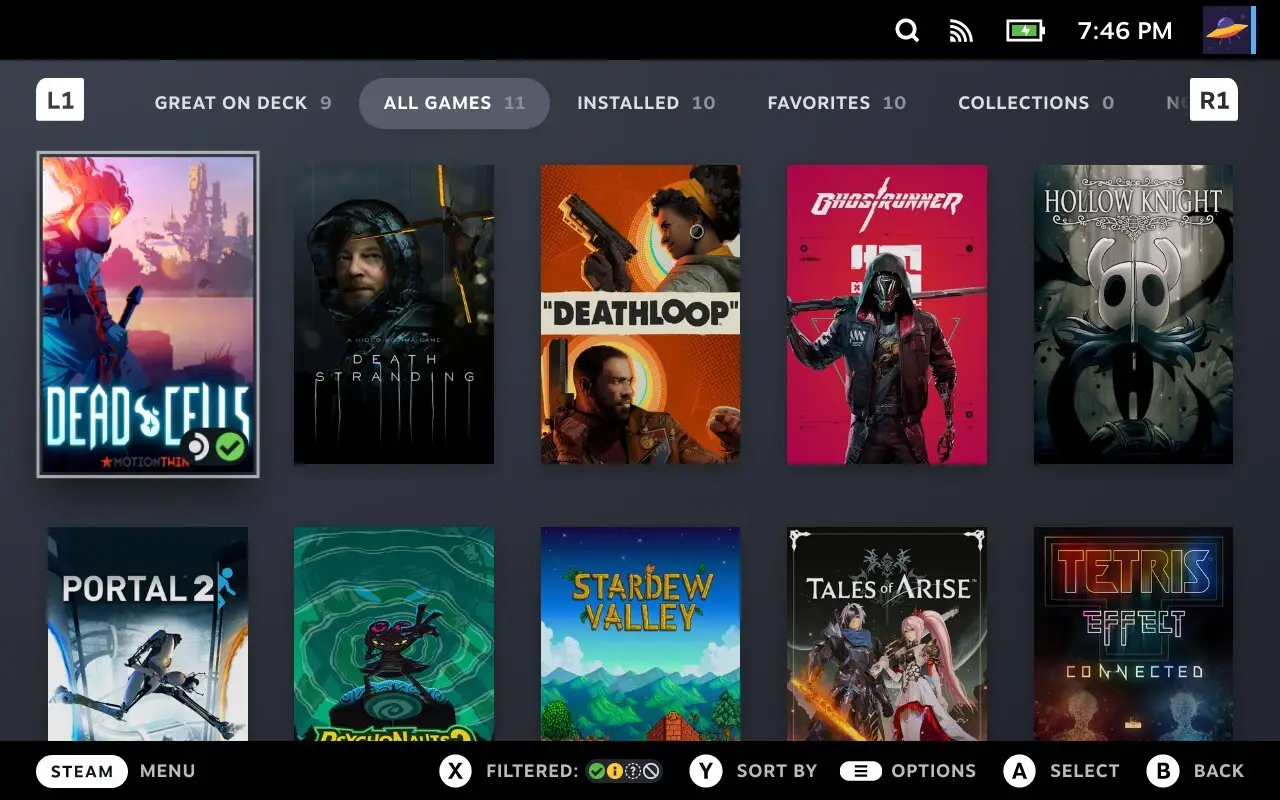
I’d be lying if I said this wasn’t what I was looking forward to most. As previously mentioned, the Steam Machine runs on Valve’s Linux-based OS, SteamOS. What this means is that every title already marked “Steam Deck Verified” should provide a useful indication of compatibility, although Valve is introducing a separate Steam Machine Verified programme to account for the new hardware and performance targets.
But so what? What is the difference between the Steam Machine running on this system and one running on Windows? Well, for one, since it’s on Linux, it’s free, which, given the cost of the system, is a definite plus! But also it gives you complete control of your PC without the software restraints that come with Windows. In addition to this, it puts games front and centre, which is sort of where the idea of the Steam Machine as a console killer came from. The user interface looks and works similar to Steam’s Big Picture Mode, being optimised for controller use and allowing you to jump in and out of games with ease.
Valve’s Proton compatibility layer has come a long way since the Steam Deck launched, a large proportion of the Steam catalogue now runs well through Proton, although compatibility can still vary by title.. Anti-cheat-heavy games are still the main sticking point on Linux, and native Windows applications remain a workaround rather than a given.
But the flip side is that SteamOS 3.8 can now officially be installed on compatible PCs using AMD graphics, allowing both the TOASTER and FOUNDRY to offer a similar controller-focused experience
Meet the TOASTER and the FOUNDRY. Our answer to the Steam Machine.
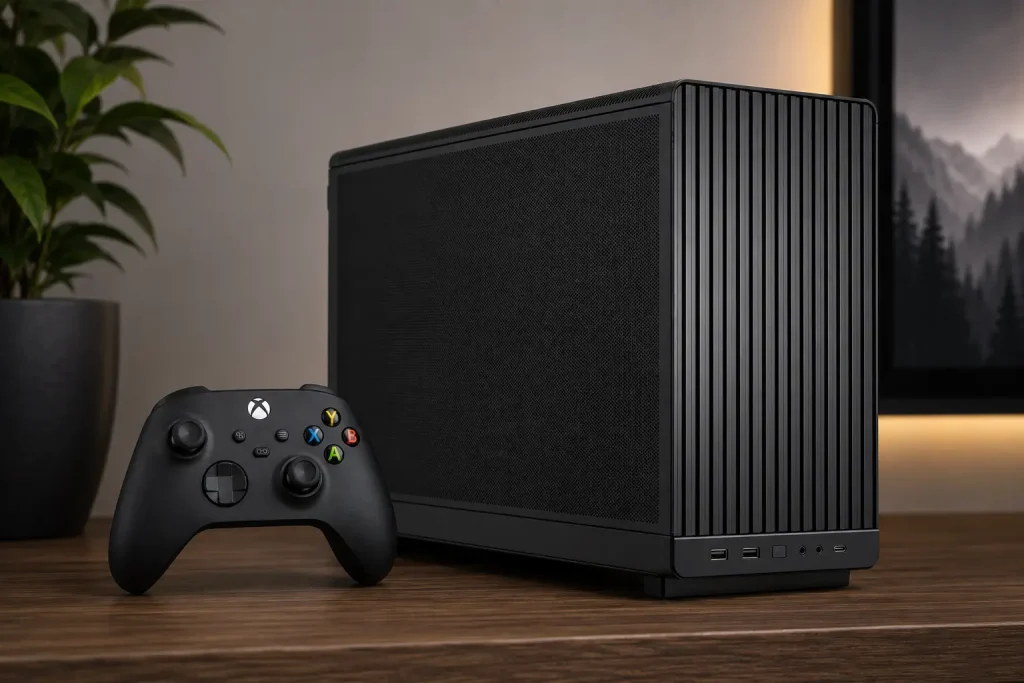
While Valve was preparing its new hardware, we were developing two desktop-based alternatives of our own. Introducing the TOASTER and the FOUNDRY, two compact gaming systems for the living room built around proper desktop hardware in a case that sits just as neatly under your TV. Both come with a wireless Xbox controller included as standard and 2TB NVMe SSD storage. And, with SteamOS compatible with AMD systems, both support SteamOS or Windows 11.
Here’s how they stack up against the Steam Machine:
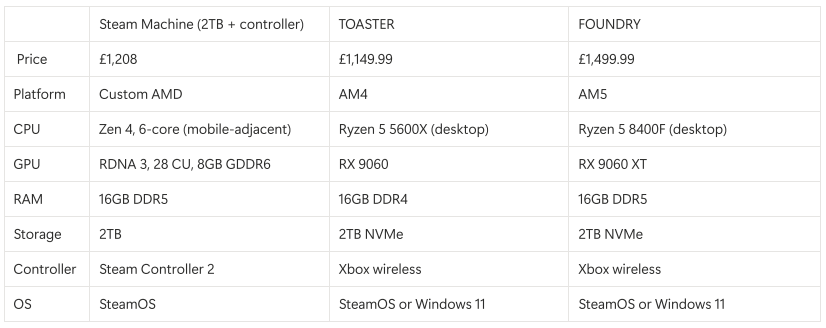
The TOASTER:
Coming in at £1,149.99, that’s £58.01 less than the 2TB Steam Machine with controller; the TOASTER delivers more than 20% better gaming performance and features proper desktop hardware that you can actually upgrade. Featuring a Ryzen 5 5600X, a full desktop processor, not a cut-back laptop component or custom part, this is true traditional desktop hardware. You can conquer your Steam library or binge your favourite shows from the comfort of the couch, all with the knowledge that everything is running seamlessly behind the scenes powered by a proven six-core desktop processor with the performance needed for modern games, streaming and everyday PC use. The dedicated Radeon RX 9060 is capable of strong 1080p performance and can deliver smooth 1440p gaming in many titles, depending on the settings used. That is a considerable step up from the Steam Machine, which can struggle to maintain similar frame rates at medium settings in demanding titles.
The FOUNDRY:
Taking things up a notch, the FOUNDRY moves to AMD’s current AM5 platform with confirmed support until 2029. It adds DDR5 memory and the RX 9060 XT, delivering roughly 40% better graphics performance than the Steam Machine and around 15% more than the TOASTER. That is £292 more than the Steam Machine’s top configuration, but it buys a substantial increase in graphics performance, a modern AM5 platform and a much stronger upgrade path.
What does this mean for you?
The Steam Machine makes sense for a specific type of buyer: someone who lives entirely in the Steam ecosystem, wants a dead-simple living room box to pair up with their Steam Deck, and values Valve’s brand behind it. If that’s you, it delivers. But if you care about performance per pound, upgradeability, or flexibility, the TOASTER and FOUNDRY make a much stronger argument. Desktop hardware means you can swap a GPU, add RAM, or drop in a new CPU down the line without binning the whole system. You get the same SteamOS experience for free or Windows 11 if you want access to Game Pass, Epic, Battle.net, GOG, and everything else that doesn’t live inside Steam. You get access to a bigger game library, better frame rates, and, in the TOASTER’s case, a lower price tag.
SteamOS is maturing fast, but it’s still not Windows outside the Steam bubble. Both the TOASTER and FOUNDRY can be ordered with your preferred operating system, whereas the Steam Machine is supplied with only SteamOS as standard.
What do we think?
The Steam Machine is a better product than most people expected and a more expensive one than everyone hoped. Valve has done genuinely solid work with SteamOS, and the hardware performs well for its size. But at £879 to £1,208, it occupies the same price bracket as many entry-level gaming PCs. The value case is difficult to make when desktop alternatives are sitting right alongside it at the same price or less, with meaningfully better performance and an actual upgrade path.
None of this is to say the Steam Machine performs badly; it doesn’t. But the 2015 Steam Machines failed because SteamOS wasn’t ready. SteamOS is ready now. The hardware, at this price, is the conversation.
Which Living Room Gaming PC Is Right for You?
If you’ve made it this far, the choice is now in your hands. The Steam Machine is a strong contender for the last spot on your TV stand, bringing Valve’s vision of an open, console-like PC experience to a wider audience. It’s polished, more so than its previous iteration, compact, and built for convenience. But at the end of the day, is plug and play worth it if you can get greater flexibility and performance for almost £60 less?
No matter where you stand, the Steam Machine marks a change that puts more pressure on console gaming than ever before as PCs start to encroach on the living room gaming space.
Meet the TOASTER – £1,149.99 – with more performance than the Steam Machine for less money.
Meet the FOUNDRY – £1,499.99 – AM5 platform, RX 9060 XT, roughly 40% more graphics performance than the Steam Machine.

Author: Grace Wilkinson
Grace is an English Literature and Creative Writing graduate with a passion for storytelling and video games.